Rebooting the ATLAS Sync Architecture: From Friction to Sovereignty
How a 2.3GB cloud bottleneck became a 25MB sovereign reference layer through architectural intent.
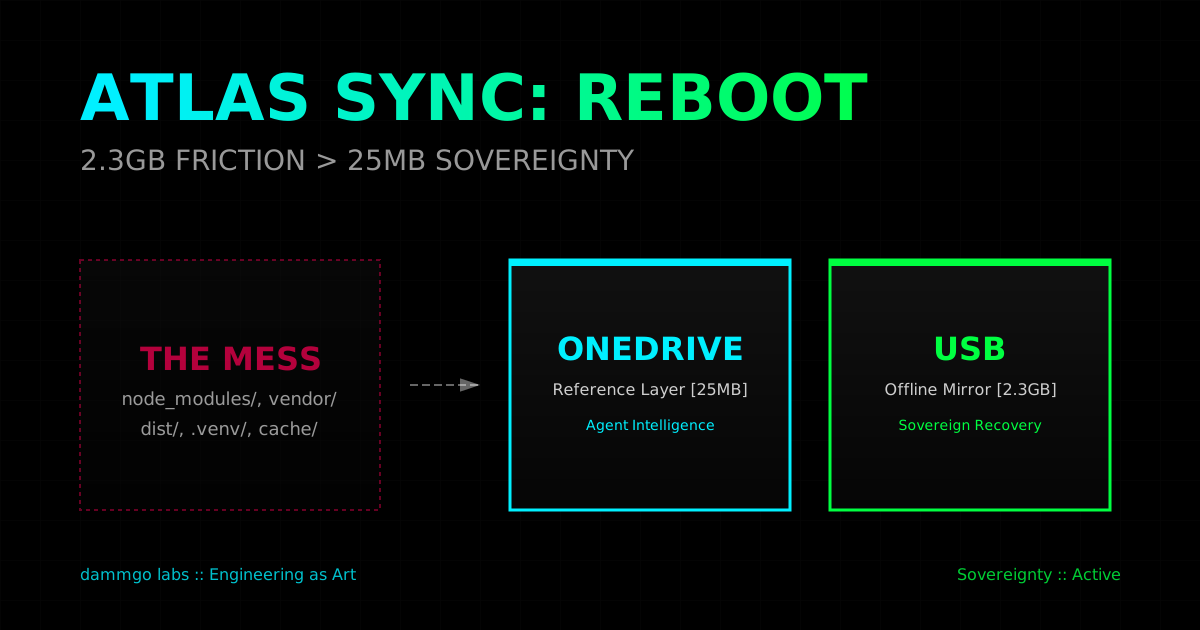
The Obsession with Sync Sovereignty
I am awake fixing this so you can sleep.
ATLAS is not a project. It is a sovereign ecosystem.
And every sovereign ecosystem eventually collides with a silent enemy: friction.
This is the story of how a seemingly innocent PowerShell script revealed a deeper architectural flaw — and how we rebuilt it into a two-layer system that finally respects the core tenets of dammgo labs.
The Mess: OneDrive as a 2.3GB Bottleneck
The original sync design was naïve:
OneDrive was treated as a full mirror of ATLAS.
That meant:
node_modules/vendor/dist/build/__pycache__/.venv/- thousands of tiny files
- regenerable artifacts
- dependency noise
- temporary caches
All pushed into OneDrive.
The result:
- 2.3GB of cloud friction
- slow indexing
- sync conflicts
- CPU spikes
- SSD wear
- OneDrive stuck “processing changes” for minutes
- AI Agents drowning in irrelevant files
This was not a sync system.
It was technical debt disguised as convenience.
# The old naive mirror (The Mess)
robocopy $source $onedrive /MIR
This is the kind of architecture that keeps founders awake at night.
The Strategy: Two Layers, Two Purposes
The reboot began with a simple question:
“Why is OneDrive carrying weight it was never designed to carry?”
The answer became the architectural pivot:
🔵 Layer 1 — OneDrive: The Reference Layer
A sovereign, lightweight, cloud-native layer containing only:
.md.txt.json.yaml.pdf.docx
Nothing else.
This is the layer the Meta-Agent reads.
This is the layer you browse.
This is the layer that stays fast.
🟢 Layer 2 — USB: The Offline Mirror
A complete, faithful, offline snapshot of ATLAS.
- All files
- All directories
- No exclusions
- No filters
- No dependencies on the cloud
This is the layer you recover from.
This is the layer you migrate with.
This is the layer that preserves sovereignty.
The strategy was simple:
OneDrive is for intelligence.
USB is for survival.
The Craft: Building sync-atlas (The Transformation)
The transformation required a new script — not a utility, but a miniature pipeline.
✔ Reference Layer (OneDrive)
robocopy $source $onedrive /MIR /XD $excludeDirs /IF $allowedExt✔ Offline Mirror (USB)
robocopy $source $usb /MIR /R:1 /W:1✔ Exclusions (Noise Removal)
$excludeDirs = @(
  "node_modules", "vendor", "dist", "build",
  "__pycache__", ".venv", ".cache", ".tmp"
)
✔ Allowed Extensions (Signal Preservation)
$allowedExt = @("*.md", "*.txt", "*.json", "*.yaml", "*.yml", "*.pdf", "*.docx")✔ Visual Diff (Pre-Sync Intelligence)
robocopy $source $dest /L /MIR /XD $excludeDirs /IF $allowedExt✔ Help Mode (Self-Documenting)
sa -H✔ Resulting Architecture
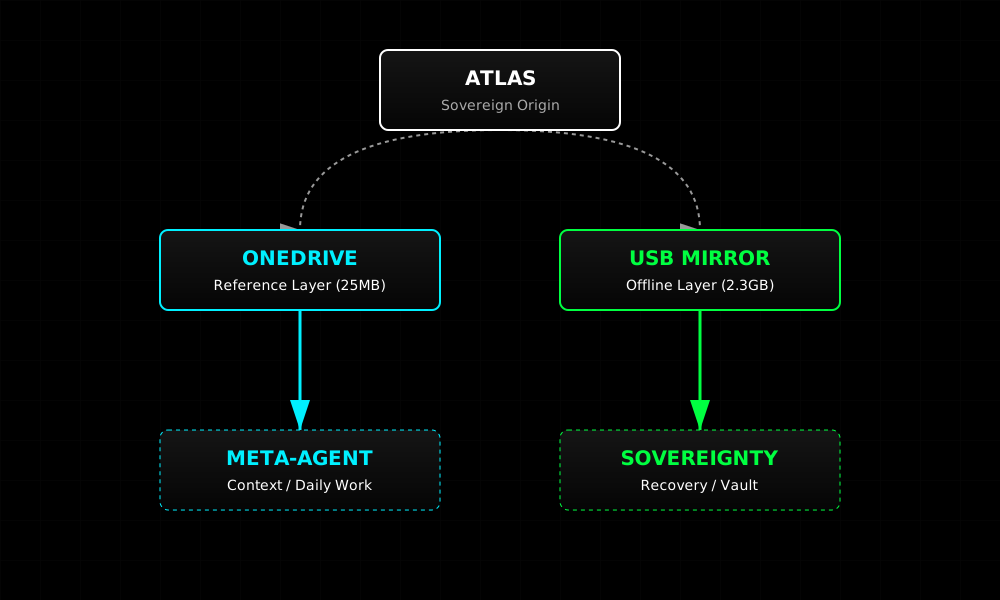
This was not a refactor.
It was a reboot of intent.
The Result: 2.3GB → 25MB (The Art)
The numbers speak for themselves:
Before (The Mess)
- 2.3GB
- Thousands of files
- Friction everywhere
- OneDrive choking
After (The Reboot)
- 25MB
- Only meaningful files
- Instant sync
- Zero friction
- Meta-Agent reading clean context
- USB holding the full sovereign mirror
This is the kind of transformation that builds engineering credibility.
This is the kind of architecture that belongs to dammgo labs.
This is Engineering as Art.
dammgo labs - Engineering as Art. Sovereignty as Pulse.